
Close


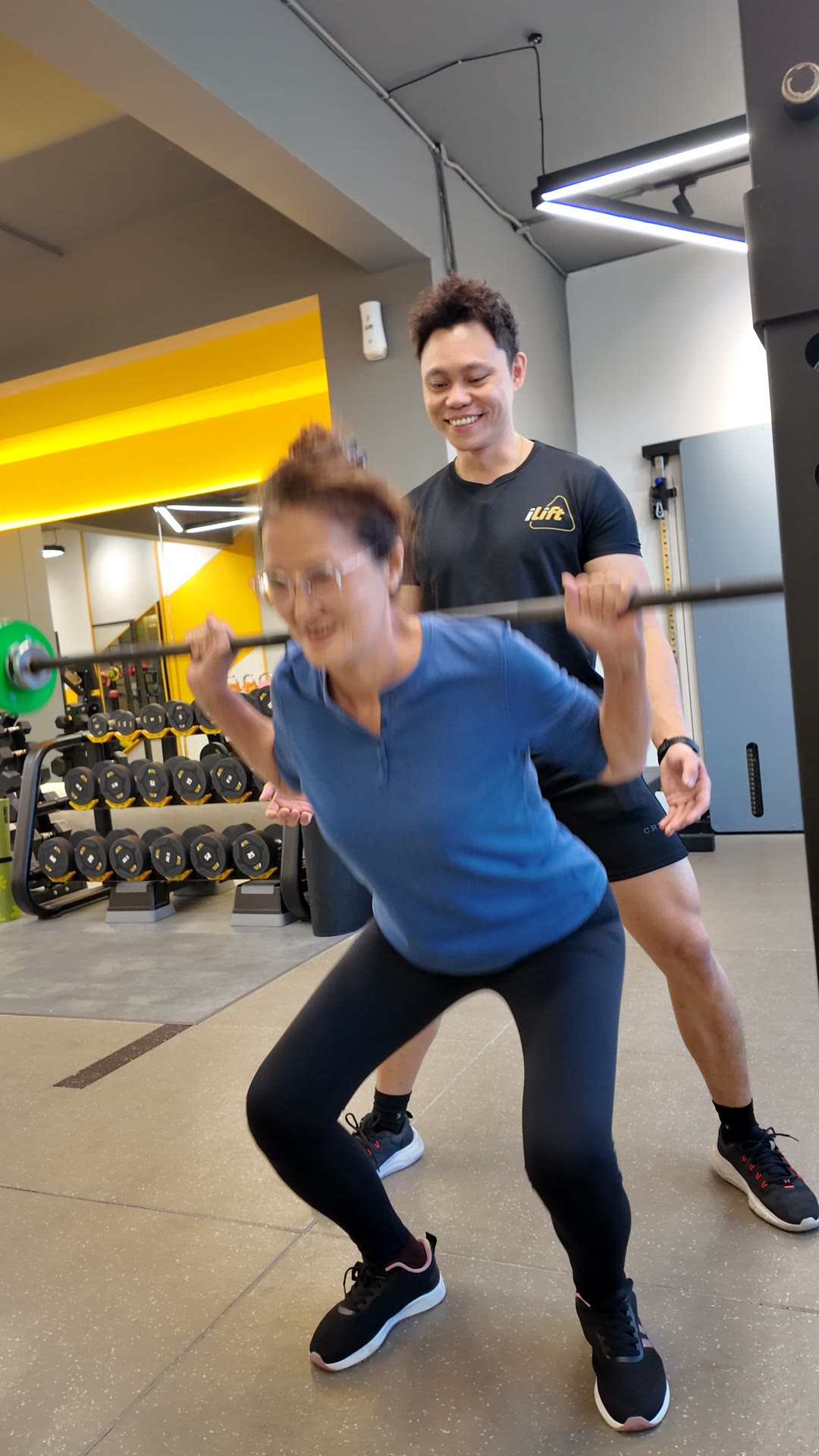
Yes. Most people with knee pain or knee osteoarthritis can lift weights. Doctors' guidelines list exercise, including muscle strengthening, as a core treatment for knee arthritis.[1][2] The goal is to train in a way that feels safe and comfortable, so you keep coming back.
"Can I still lift weights with my knees like this?" We hear this almost every week at our studios in Kuching.
My answer is always the same. Yes, you can. In fact, almost anyone can. The real question is how to do it so you feel safe and comfortable.
With knee arthritis, the main problem is pain. When training hurts, you won't want to do it. So this whole guide is about one thing: keeping the pain in check, so you can keep training.
Your thigh muscles, called the quads, help hold and protect your knee. When they are weak, the joint takes more of the load. People with weaker thigh muscles are more likely to get knee arthritis.[5]
This is why big health bodies now put exercise first. In the UK, NICE tells doctors to offer exercise, such as muscle strengthening, to everyone with osteoarthritis.[1] In the US, the American College of Rheumatology strongly recommends exercise for knee arthritis.[2]
A 2024 Cochrane review looked at 139 studies with over 12,000 people. On average, exercise eased knee pain and helped people move better.[3] The gains were modest, which is why sticking with it matters.
In Denmark, almost 10,000 people with knee or hip arthritis did a 6-week program of exercise and education, called GLA:D. A year later, knee pain had dropped by about a quarter. Fewer people needed painkillers too.[4]
This is the biggest fear we hear. "If I train too hard, I'll wear my knee out."
The research says exercise that loads the knee does not seem to harm the cartilage. That's the smooth cushion on the ends of your bones.[6] NICE also tells doctors to warn people that exercise may hurt a little at first. It is still good for the joints.[1]
Many people believe pain during exercise means they are damaging the joint, so they stop moving.[7] Then the muscles get weaker and the knee gets worse. Some pain is normal. What matters is how much pain, and which way it's heading.
The best time to check is your first step out of bed. Your joints are still cold and stiff from the night. That first step tells you what kind of day it is.
Some stiffness in the morning is normal with knee arthritis. It usually wears off within 30 minutes.[1]
A normal day. Train as planned.
A sore day. Still train, but go easier on the knee.
A bad day. If even simple things like walking hurt this much, stop. No leg training today.
Do the same movements, but a smaller amount. Use less weight, do fewer sets, and go slower. On squats, only go down as far as a bench, then stand back up.
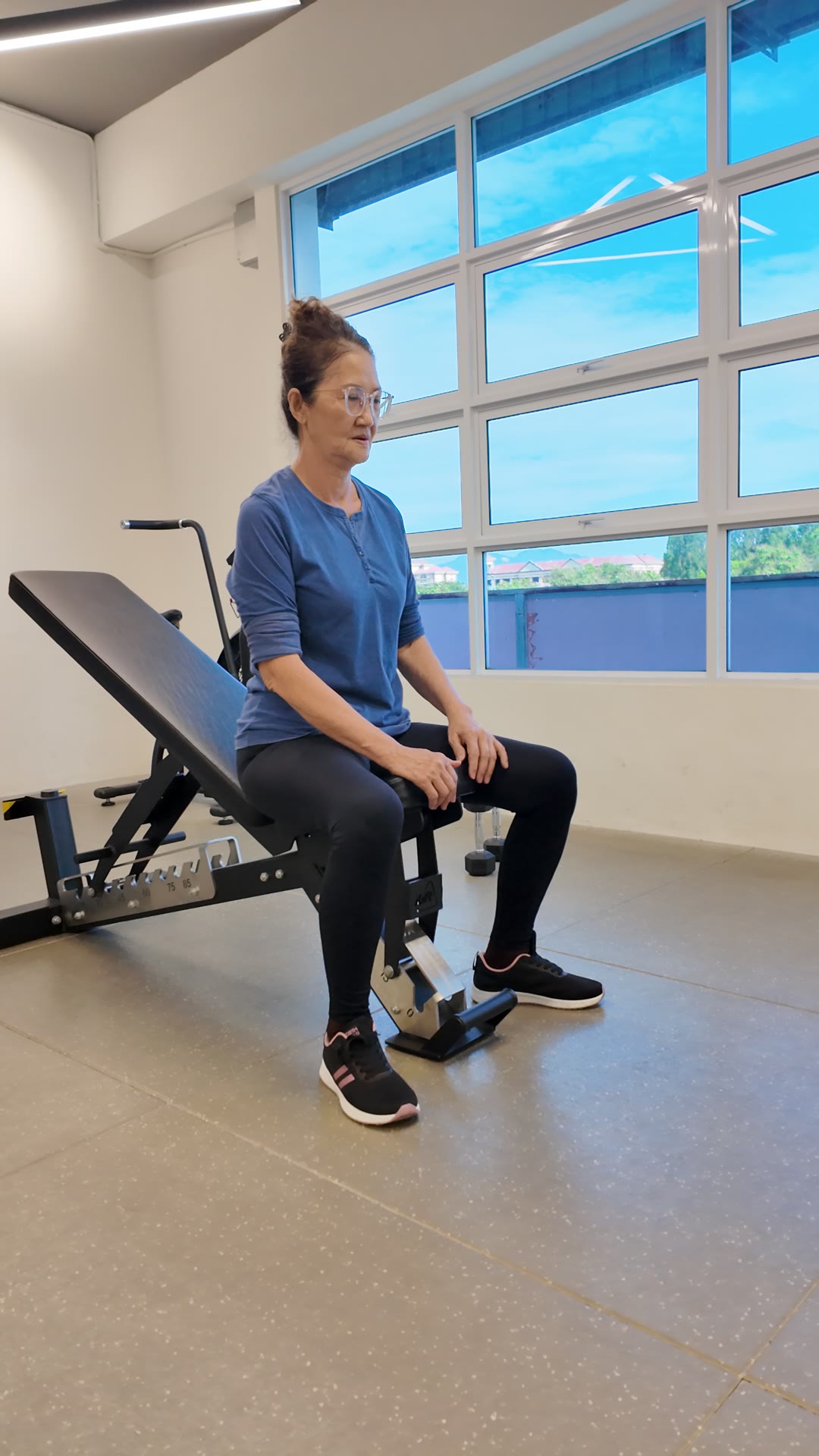
Once you start training, some pain may be there. How much depends on how bad your arthritis is. That's okay. The question is whether to keep going.
Check your knee after each set, and watch it over 2 to 3 sets.
Keep going. Many people find the knee feels better once it warms up.
Cool it. Stop loading that knee for today.
You can still finish your session. If your upper body has no pain, move on to upper-body exercises like presses and rows.
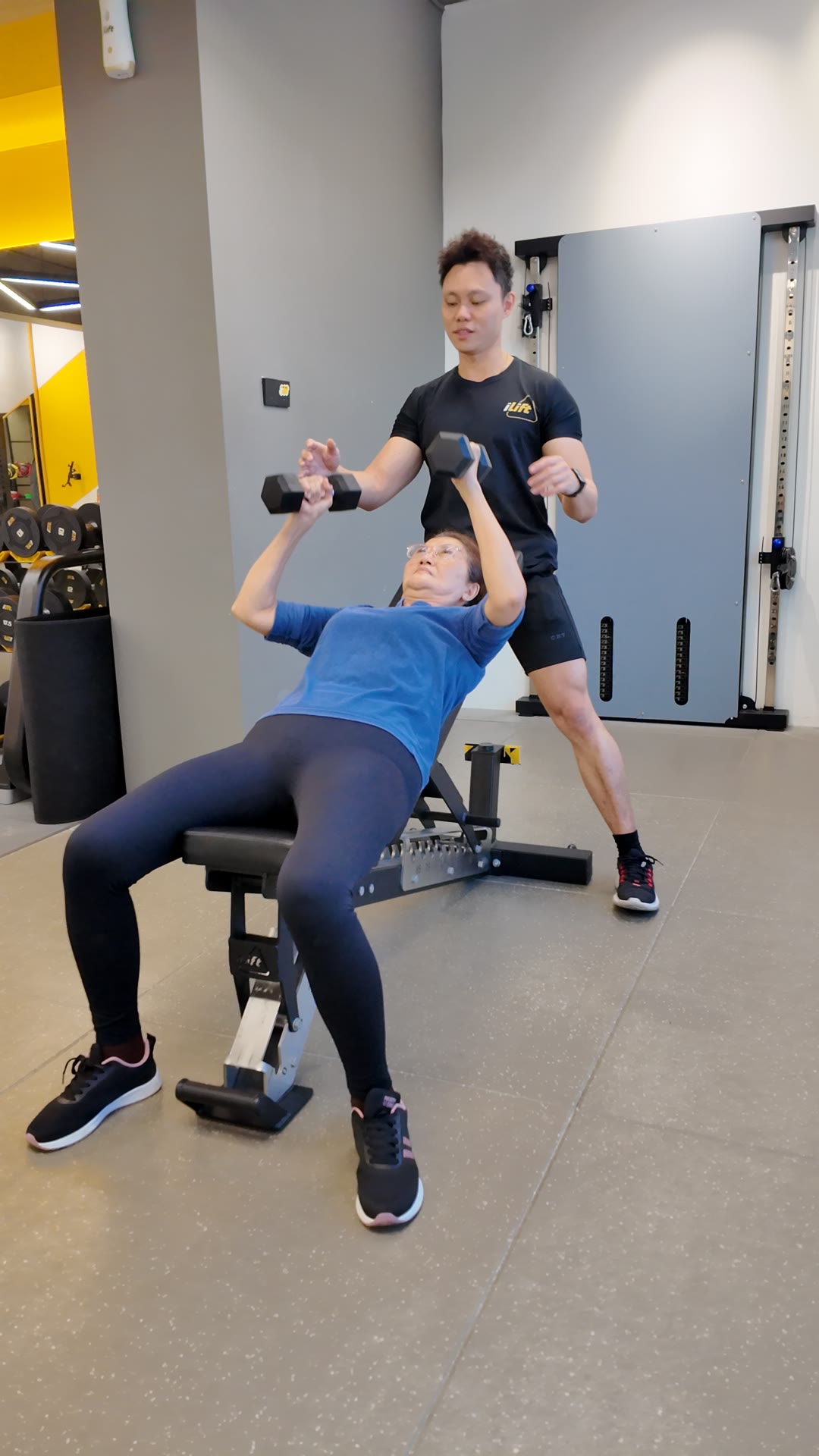
Physios who work with sore knees use a simple rule. Pain up to 5 out of 10 during exercise is okay, as long as it has settled by the next morning.[8][9]
This is where your wake-up check comes in again. If your knee is back to normal the next morning, the session was fine. If it's worse than usual, do less next time.
| When | What to check | What to do |
|---|---|---|
| When you wake up | Knee pain on your first steps, 0 to 10 | Green: train. Amber: go easier. Red (8+): no leg training today. |
| During each set | Is the pain getting worse from set to set? | Same or better: keep going. Worse over 2 to 3 sets: stop loading that knee. |
| The next morning | Is the knee back to its usual? | Yes: the dose was right. Worse: do less next session. |
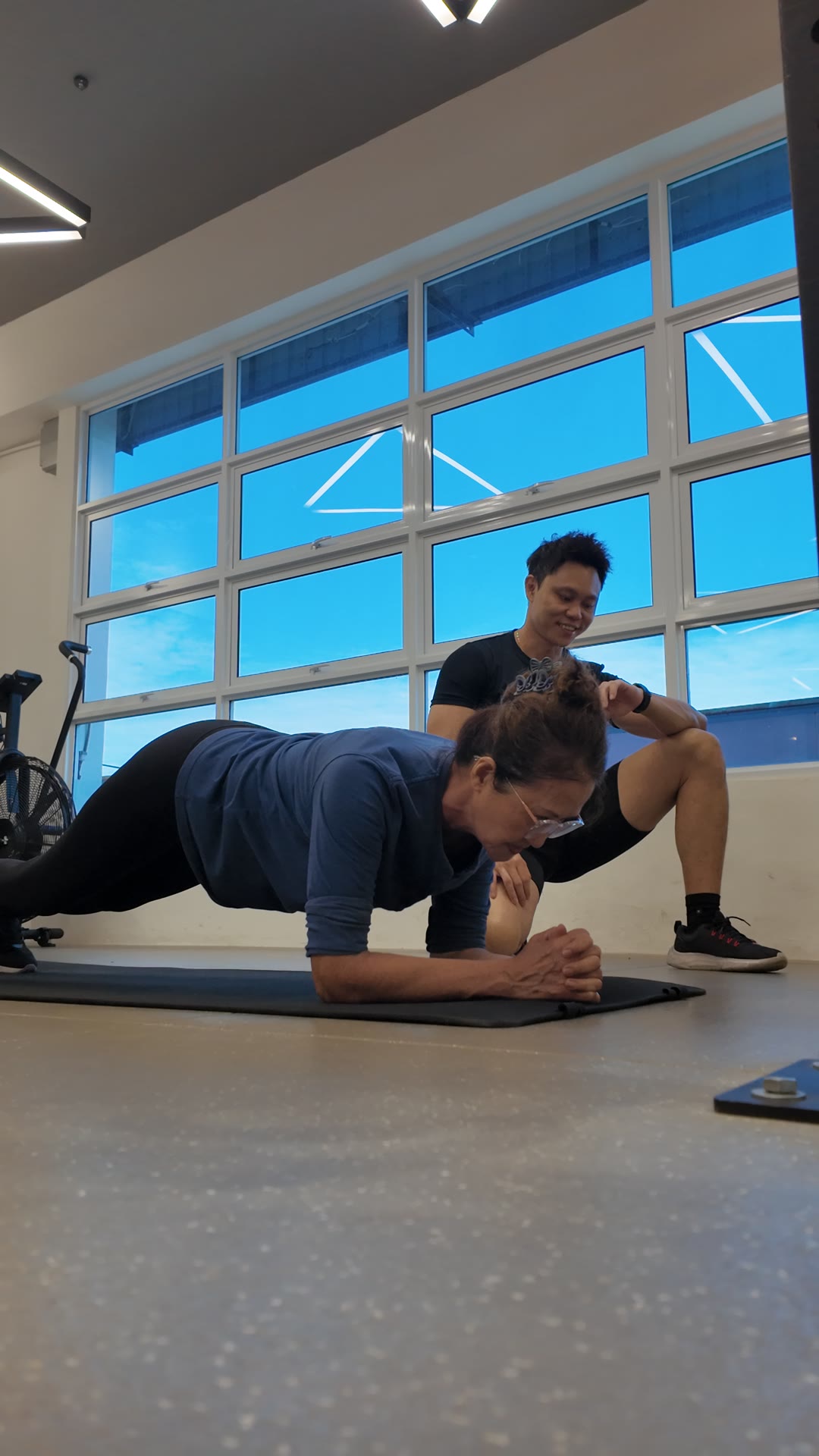
Some knee pain is not normal arthritis. Stop training and get help if your knee:[12]
Also see your doctor if your knee pain has not got better after a few weeks.[12]
The knee pain that troubled me for years is finally gone. For three or four years my knees hurt. I couldn't squat without holding onto the floor. Now I squat and stand up easily.
That's Moi Fah, one of our clients in her 60s. You can see her squatting with her coach in the photo at the top of this page.
Jonathan's story is another one. He was facing knee surgery when he started training with us. A year on, he didn't need the operation. Read Jonathan's story, or see more client stories.
Every session starts with a quick check. Your coach asks about your energy, anything new that's sore, and how you're feeling. Then they pick the right amount of training for that day.
We train people with sore knees every day, in private studios with no crowds. If you're not sure where to start, come in for a free consultation. It's a relaxed chat, with no pressure.
No. Squatting builds the thigh muscles that protect your knee. Go only as low as feels okay. On sore days, squat down to a bench or box and stand back up.
A day of rest on a bad day is fine. But long rest makes the muscles around your knee weaker. Gentle movement usually helps more than lying still.
Two to three times a week works well for most people. One large review found the best pain relief came from supervised training about three times a week.
No. There is no cure. But strength training can ease the pain and help you move better. In one large program, fewer people needed painkillers a year later.
This article is general information, not medical advice. If you have a new injury, or your doctor has told you not to exercise, speak to them first.
Tell us about your knees and your goals. We'll show you how we'd train you, safely and at your pace.
Book a Free Consultation → Optimized by Seraphinite Accelerator